.png)
Corporate Data Governance: The Backbone of Trusted, Secure, and Compliant Data

Updated: May 1
In the digital economy, data is no longer just an operational asset—it is a strategic business driver. Organizations generate, collect, process, and store massive volumes of data every day. Without a structured approach to managing this data, businesses face risks such as regulatory penalties, data breaches, poor decision-making, and loss of customer trust.
Corporate data governance refers to the framework, policies, standards, and processes that ensure data across an organization is accurate, secure, consistent, and used responsibly. It provides clarity on who can take what action, upon what data, in which situations, and using which methods. When implemented effectively, it transforms raw data into a reliable, strategic asset.
Why Corporate Data Governance Matters
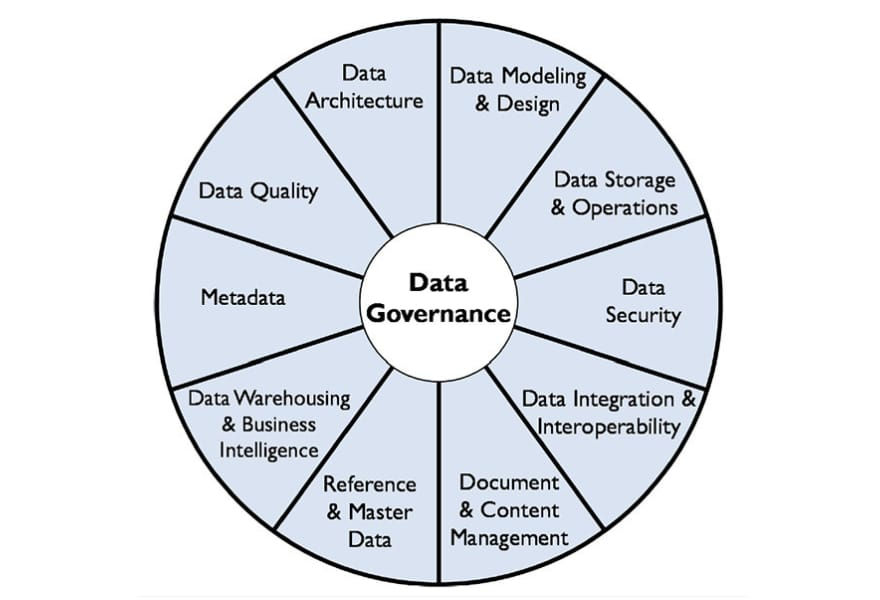
Modern enterprises operate in complex data environments—cloud platforms, on-premise systems, third-party tools, and multiple business applications. Without governance, data becomes siloed, duplicated, inconsistent, and vulnerable.
Corporate data governance helps organizations:
Improve data quality and reliability
Ensure compliance with regulations and industry standards
Strengthen data security and privacy
Enable better business intelligence and analytics
Reduce operational risks and inefficiencies
Establish accountability and ownership of data
Simply put, it ensures that data works for the business rather than against it.
Key Components of Corporate Data Governance
A strong governance framework includes several interconnected elements:
1. Data Policies and Standards
These define how data should be created, stored, accessed, shared, and archived. Standards ensure consistency across departments and systems.
2. Data Ownership and Stewardship
Clear roles are assigned to individuals or teams responsible for maintaining data accuracy and integrity.
3. Data Quality Management
Processes are established to monitor, clean, and validate data regularly to eliminate errors and inconsistencies.
4. Data Security and Privacy
Controls are implemented to protect sensitive information from unauthorized access and cyber threats.
5. Metadata Management
Understanding where data resides, how it flows, and how it is used across systems.
6. Compliance and Risk Management
Ensuring adherence to legal, regulatory, and industry requirements related to data handling.
Benefits to Business Operations
Corporate data governance is not just an IT initiative—it directly impacts business performance.
Better Decision-Making: Reliable data leads to accurate insights.
Operational Efficiency: Reduced duplication and data errors save time and cost.
Regulatory Readiness: Easier audits and compliance reporting.
Enhanced Customer Trust: Secure handling of personal and sensitive data.
Scalable Data Management: Preparedness for growth and digital transformation.
Organizations with mature governance programs consistently outperform competitors in data-driven strategies.
Challenges Organizations Face
Despite its importance, many organizations struggle with governance due to:
Lack of awareness and executive support
Resistance to change across departments
Legacy systems with inconsistent data formats
Absence of clear ownership
Rapid growth of unstructured data
Complexity of regulatory requirements
Overcoming these challenges requires a structured approach, leadership commitment, and cultural change toward data responsibility.
Steps to Implement Corporate Data Governance
A practical approach includes:
Assessment of Current Data Landscape
Identify where data exists and current gaps in management.
Define Governance Framework
Establish policies, roles, standards, and accountability.
Appoint Data Stewards
Assign responsible individuals for critical data domains.
Implement Data Quality Tools
Use technology to monitor and improve data accuracy.
Ensure Security Controls
Apply encryption, access control, and monitoring systems.
Train Employees
Build awareness about responsible data usage.
Continuous Monitoring and Improvement
Governance is an ongoing process, not a one-time project.
Role of Technology in Data Governance
Modern governance leverages tools for:
Data cataloging and classification
Automated data quality checks
Access control management
Audit trails and compliance reporting
Integration across cloud and hybrid environments
Technology simplifies enforcement and monitoring of governance policies at scale.
Creating a Data-Driven Culture
Successful corporate data governance requires cultural adoption. Employees at every level must understand the value of data and their role in protecting and maintaining it. Leadership must champion governance as a strategic initiative, not a compliance burden.
When data responsibility becomes part of the organizational mindset, governance becomes sustainable and effective.
Future of Corporate Data Governance
With the rise of AI, big data, and cloud computing, governance will play an even more critical role. Organizations will need more advanced frameworks to manage data ethics, automated decision-making, and cross-border data regulations.
Corporate data governance will evolve from a control mechanism into a competitive advantage that fuels innovation and trust.
Summary
Corporate data governance is the foundation of reliable, secure, and compliant data management in modern enterprises. It ensures data integrity, protects sensitive information, enables informed decision-making, and supports regulatory requirements. By implementing clear policies, assigning ownership, leveraging technology, and building a data-conscious culture, organizations can transform their data into a powerful strategic asset. In a world driven by information, governance is not optional—it is essential for sustainable growth and operational excellence.
Frequently Asked Questions (FAQ)
1. What is corporate data governance?
It is a framework of policies, roles, and processes that ensure organizational data is accurate, secure, and compliant.
2. Why is data governance important for businesses?
It improves data quality, ensures compliance, enhances security, and supports better decision-making.
3. Who is responsible for data governance?
Data stewards, IT teams, compliance officers, and business leaders share responsibility.
4. How does data governance improve data quality?
Through defined standards, validation processes, and continuous monitoring.
5. Is corporate data governance only for large enterprises?
No, organizations of all sizes benefit from structured data management.
6. What tools are used in data governance?
Data catalogs, quality monitoring tools, access control systems, and compliance software.
7. How does governance help with regulatory compliance?
It ensures proper documentation, audit trails, and adherence to data handling regulations.
8. What are the biggest challenges in implementing data governance?
Resistance to change, lack of ownership, and complex data environments.
9. How often should governance policies be updated?
Regularly, especially when regulations or technologies change.
10. Can data governance support digital transformation?
Yes, it provides the structured data foundation required for analytics, AI, and innovation.


Comments